These objectives not only provided the entire industry with guidance on how to proactively accomplish the manufacture and installation of carbon efficient solutions throughout the rail industry, but highlighted the importance of collaboration throughout every stage of the design, installation and maintenance phases. This can ensure a consistent and long term approach to achieving net zero.
The collective approach to decarbonising the rail network actioned by rail providers manufacturers and contractors on the design and manufacture of building products has been to the credit of the sector.
At
Ibstock Anderton the challenge was simple to understand, but tougher to deliver: how do we remove carbon from our mainly concrete based products without compromising the quality and assurance our products have delivered for many years?
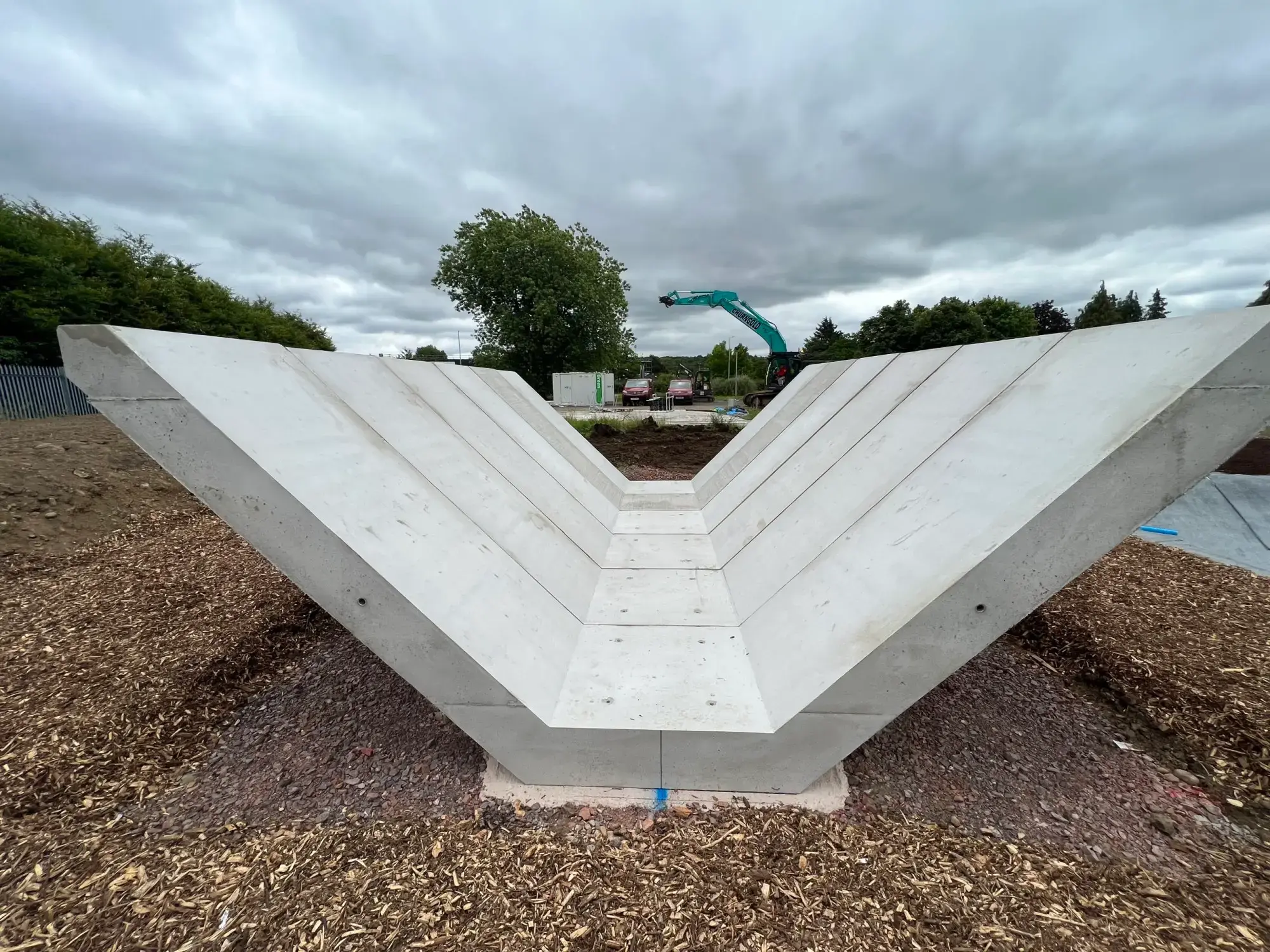
Necessity is the mother of invention, and this design challenge allowed us to rewrite the expectations of what precast concrete products could do and now our bestselling
concrete cable trough (C/1/9) has 22.5% less embodied carbon compared to the previous design (based on A1-A3 GWP). We managed to reduce the embodied carbon by replacing traditional cement with Ground Granulated Blast Furnace Slag (GGBS) in the manufacturing process.
This product has an
EPD that demonstrates we have one of the lowest carbon Concrete Cable Troughs on the market.
This is the same troughing used on the
Colne Valley Viaduct as part of the HS2 project.
The success of this process allowed us to apply the thinking to our
platform copers, and we have been able to reduce the embodied carbon by a substantial 35%, which is a key benefit of our
G-Tech Coper.